


SeeU
3.53.00 Reviews
App Specs
- Version
- 1.1.4
- Updated On
- License
- Free
- Downloads
- 100,000+
- Developer
- XIANYU TECHNOLOGY LIMITED
- Categories
- Social
- Platform
- Android
Screenshots


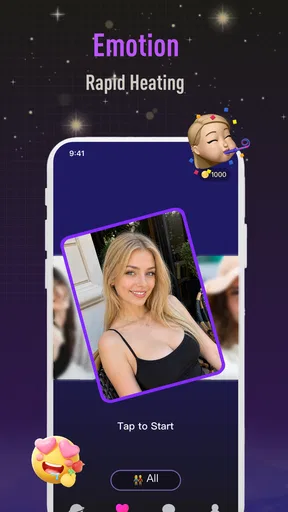

 Analysis by AppCompare
SeeU is a social app built around the simple idea of finding friends, and I approached it with a practical question: does it remain useful after the first burst of curiosity? My early impression was that its appeal comes from lowering the barrier to meeting people. Instead of treating social discovery as a one-off search, it invites you to think about who you would actually like to keep in touch with. That sounds modest, but it changes how I judge the app. A social tool does not need to be packed with features to be worthwhile; it needs to help people return for a clear reason.
Developed by XIANYU TECHNOLOGY LIMITED, SeeU sits in the social category and is free to install. It is aimed at a mature audience, with a 17+ content rating, so I would not treat it as a casual app for younger users. Its store summary is “Seek for friends,” while the short description simply presents the name SeeU. Those brief labels leave the real experience to the app itself, which makes the first few sessions especially important.
From first-week curiosity to a usable social habit
I’d use this section to look beyond the initial excitement and consider what makes SeeU worth returning to: whether a new conversation can become part of a manageable, genuine social routine. That shift also helps me judge the app more fairly, because useful connections depend on both a clear reason to open it and thoughtful follow-through.
What makes the opening experience appealing
During the first week, the strongest part of SeeU is the feeling of possibility. A friend-finding app can make an ordinary spare moment feel more open-ended: instead of scrolling through content with no personal outcome, I can use that time to look for people who might fit my interests or social goals. That is the kind of small change that makes an app feel fresh without requiring it to become complicated.
I also like the fact that SeeU is easy to understand at a glance. Its purpose is not hidden behind a crowded entertainment interface. If my goal is to meet people, I know why I am opening it. That clarity matters because social apps often lose users when the main action becomes buried under unrelated material, constant notifications, or too many competing areas.
Still, the first-week experience depends heavily on the quality of the people I encounter. No friend-finding service can manufacture genuine compatibility simply by placing profiles or conversations in front of me. The app can create opportunities, but I still have to decide whether someone seems trustworthy, whether the conversation feels natural, and whether the connection deserves more time. I found that distinction important: SeeU is a doorway, not a replacement for judgment.
A realistic everyday use case
Imagine moving to a new city, starting remote work, or discovering that your existing friends are no longer free at the same times. In that situation, I would use SeeU in short sessions rather than leaving it open all day. I might check it after work, look for a few promising connections, and respond only to conversations that feel comfortable and relevant. The goal would not be to collect contacts. It would be to identify one or two people with whom a real exchange could develop.
Worth Reading Before You Choose

EA SPORTS FC Mobile 26 Is a Bigger Football Game, but It Takes Time

Flipboard Shows What News Apps Must Do Beyond the Feed

Switching to Android Auto Means Rethinking Your Driving Routine

Google Calendar Makes a Crowded Week Easier to Manage

Ludo King Makes the Most of the Minutes Between Plans

Baby Panda World Brings Quick Play to Modern Phones, but Its Game Library Feels Busy
That workflow is more sustainable than treating the app like a social lottery. I would keep my profile or introduction focused, avoid promising more availability than I really have, and move slowly when a new person asks for personal details. The practical insight is that the app works best when I bring a clear reason for using it. “I want to meet anyone” is too broad. “I want a conversation partner for a shared interest” gives each interaction a better chance of becoming meaningful.
Who is most likely to enjoy it
SeeU is a reasonable fit for adults who want to widen their social circle without relying entirely on existing networks. It may also suit people who prefer starting conversations digitally before deciding whether they want a deeper connection. The app gives that process its own space, which can feel less awkward than approaching strangers in person.
I would be more cautious if I were looking for a highly structured community, professional networking, local event planning, or a platform centered on long-established groups. Those needs are usually better served by apps designed around events, work identities, hobbies, or specific communities. SeeU’s broad friend-seeking purpose is useful precisely because it is open, but that openness can also make the experience less focused.
Getting value without overusing it
One of the better habits I developed was treating each session as a filter rather than a hunt. I did not need to respond to every possible connection. I looked for signs of mutual effort, a conversation that moved beyond one-word replies, and a tone that respected boundaries. That approach reduces wasted time and protects the app from becoming another endless scroll.
A second useful habit is to write down what I actually want from the experience before spending money inside the app. SeeU is free, but in-app purchases range from $0.49 to $254.99 per item. That is a very wide span, so I would not buy anything impulsively just because a conversation feels exciting or because I want faster progress. I would first use the free experience long enough to understand whether the app is helping me form connections at all.
Where the novelty starts to fade
The first-week excitement can be misleading. New faces and fresh conversations naturally feel more interesting than familiar routines, but novelty is not the same as recurring value. After the initial exploration, I began asking whether SeeU helped me maintain relationships or merely discover them. That is the point at which many social apps become repetitive: the search continues, while the connections already made receive less attention.
For SeeU to earn a permanent place on my phone, I would need a reason to return that goes beyond curiosity. That reason might be an active conversation, a small circle of people I genuinely enjoy hearing from, or a reliable way to find compatible friends. If none of those develops, the app risks becoming something I open occasionally, browse briefly, and forget again.
Month-to-month value depends on follow-through
In my view, the long-term value is less about how many people I can encounter and more about whether I can turn a promising interaction into a stable connection. That requires effort from both sides. I need to reply when I say I will, ask questions instead of waiting to be entertained, and recognize when a conversation has naturally ended. SeeU can support the beginning, but it cannot supply the consistency that keeps a friendship alive.
This is also where SeeU differs from the usual alternatives. Messaging apps are strongest once I already know someone. Event-based communities are better when I want a shared activity to create the first meeting. Large social networks are useful for keeping up with an established circle, while dating-oriented services usually apply a different kind of intention to personal discovery. SeeU occupies the less formal space between those options: it is for seeking friends, but that broad mission means I may need to do more work to define the connection myself.
That trade-off can be positive. A narrower service may give me better structure but fewer kinds of relationships. SeeU’s open-ended approach may feel more natural for someone who does not want every new interaction placed into a professional, romantic, or hobby-specific box. The downside is that I must be more selective, because not every conversation will have a clear direction.
How I would use it after the first month
After a month, I would stop measuring the app by the number of new profiles or conversations and start measuring it by the quality of my routine. A useful routine might involve checking in a few times each week, replying to people I already know, and ending inactive conversations instead of keeping a long list of unfinished chats. This keeps the app from turning social discovery into administrative work.
I would also review my own expectations. If I want instant close friendships, SeeU may disappoint me. If I am willing to have several ordinary conversations before finding one that feels promising, the experience becomes more realistic. Friendships usually grow through repetition, shared context, and reliability. A friend-finding app can make the first contact easier, but it cannot compress that entire process into a few taps.
The maintenance burden is easy to underestimate
The main maintenance burden is not technical complexity; it is attention. Every social app asks me to decide whom to answer, which conversations to continue, and how much personal information to share. SeeU may be simple to open, but keeping it useful requires regular pruning. If I let every weak connection remain active, the app becomes noisy. If I reply too rarely, the people I actually like may assume I am not interested.
I recommend setting a personal limit before the app starts competing with the rest of my day. For example, I would rather have a small number of conversations that I can answer thoughtfully than a crowded inbox that creates guilt. This is one of the less obvious trade-offs of a broad friend-finding service: more possibilities can create more social responsibility. The app feels lighter when I treat attention as limited.
Profile upkeep is another practical consideration. If my interests, tone, or availability change, an outdated introduction can attract the wrong expectations. I would keep the description honest and specific without revealing sensitive details. A short explanation of what kind of friendship I want is more useful than trying to sound universally appealing.
Safety and boundaries should shape the experience
Because SeeU is rated for mature users, I would approach it as an adult social environment rather than a supervised youth platform. I would avoid sharing my home address, financial information, workplace details that identify my routine, or private documents. I would also be wary of anyone who pushes quickly for money, secrecy, or a move to another service before trust has been established.
My preferred workflow would be to keep early conversations inside the app, look for consistent behavior, and use a public setting if I ever decide to meet someone in person. I would tell a friend where I was going and leave immediately if the interaction felt pressured or uncomfortable. These steps are not a criticism of SeeU alone; they are sensible boundaries for any service that connects strangers.
Where fatigue comes from
The first source of fatigue is repetition. If many introductions feel interchangeable, I may stop reading carefully. The second is uneven effort: one person asks thoughtful questions while another expects me to carry the entire conversation. The third is uncertainty. When the app is broad rather than organized around a shared activity, I may spend more time deciding what a connection is supposed to become.
There is also emotional fatigue. A string of ignored messages or conversations that disappear without explanation can make social discovery feel like work. I would protect myself by treating silence as information rather than as a personal verdict. Not every connection is a match, and the app cannot guarantee that people will communicate with the same level of courtesy.
Purchasing pressure can add another layer of tiredness. Since the app is free to start but includes paid items, I would be especially careful not to confuse spending with progress. A purchase may change access or convenience, but it cannot make another person interested, respectful, or compatible. That is the clearest financial rule I would apply here: pay only for a benefit I understand and would still value without the excitement of a new connection.
Performance expectations and practical fit
SeeU supports Android devices from version 5.0 onward, which makes it accessible to people using older Android hardware. That broad compatibility is helpful if I do not own a recent phone, although the day-to-day experience will still depend on the device and connection I use. I would keep the app updated rather than assuming an older installation will provide the smoothest experience.
The current version is 1.1.4, and the app reached the store on September 5, 2025. Those details place it in a relatively early stage of its public life, so I would judge it with some patience while also paying attention to how consistently it improves. Early novelty can attract attention, but lasting value depends on whether the service becomes more dependable and whether its community develops enough activity to support returning users.
What the rating tells me, and what it does not
SeeU has an average rating of 3.5 from around 339 ratings, with only a small number of written reviews. I see that as a mixed but not decisive signal. It suggests the experience has not been universally smooth, yet the rating alone cannot explain whether people disliked the design, the available connections, the pace of conversations, or the expectations they brought with them.
It has passed 100K installs, which indicates that the idea has reached a meaningful audience without making the app feel established everywhere. For a friend-finding service, the size and activity of the user base matter more to me than the install figure itself. An app can be widely downloaded and still feel quiet in the places or interest areas that matter to one particular user.
This is why I would avoid deciding after one short session. I would give it enough time to see whether I can find conversations that match my goals, but I would not force myself to stay if the experience repeatedly feels empty, repetitive, or uncomfortable. A social app should expand my options, not become another obligation.
Who should skip it
I would skip SeeU if I need strict identity verification, a professionally moderated niche community, event scheduling, or a clearly defined relationship category. I would also skip it if I dislike initiating conversations or if I expect an app to deliver a ready-made friend group with little effort. Its open purpose requires participation and patience.
It may also be the wrong choice for someone who already has a reliable community and does not want to manage additional conversations. In that case, a group chat, local club, or activity-based service could offer more recurring structure. SeeU makes more sense when the problem is not staying in touch with known people, but finding new people to know in the first place.
My long-term verdict
After the novelty fades, I see SeeU as a useful but conditional social tool. I like its direct purpose and the flexibility of looking for friendship without forcing every interaction into another category. The free entry point makes it reasonable to test, and its broad Android support lowers the hardware barrier. At the same time, the app does not remove the difficult parts of social discovery: filtering, patience, boundaries, and consistent follow-through.
My recommendation is to try SeeU as a focused experiment, not as an automatic daily habit. Give it a clear purpose, keep your conversations manageable, and do not spend money until you understand what you are receiving. If a few connections develop into comfortable, recurring conversations, it can earn a place in your routine. If the experience remains a cycle of browsing and abandoned introductions, I would move to a more structured alternative instead.
For me, that is the fair test of SeeU: not whether it feels interesting during the first week, but whether it helps create relationships worth maintaining in the months that follow. It has enough clarity to be worth trying, but its lasting value depends far more on the quality of the community and my own boundaries than on the promise of endless new contacts.
Pros
- Simple interface makes it easy to start using the app quickly.
- Useful for staying connected with people through visual updates.
- Notifications help you keep track of new activity and interactions.
- The app offers a convenient mobile experience for checking content anywhere.
- Social features can encourage regular engagement with your contacts.
Cons
- Some features may require creating an account and sharing personal details.
- Frequent notifications can become distracting without careful settings.
- Content quality depends heavily on how active your contacts are.
- The app may use considerable battery when running background updates.
- Privacy options should be reviewed carefully before sharing personal content.
FAQs for SeeU
What is SeeU and what can I use it for?
SeeU is a social communication app designed to help users meet, chat with, and interact with other people online. Depending on the version and region, it may include user profiles, messaging, video or voice communication, live interactions, and discovery tools. Before downloading, check the current app-store description because available features can vary by country, device, age requirements, and future updates.
Is SeeU free to download and use?
SeeU can generally be downloaded without an upfront charge, but some features may require in-app purchases, subscriptions, virtual credits, or other paid options. Free access may be limited by usage time, communication tools, profile visibility, or premium functions. Review the pricing information in the Google Play Store or Apple App Store before making a purchase, and confirm whether subscriptions renew automatically.
Is SeeU safe for chatting and meeting new people?
As with any social or communication platform, SeeU should be used carefully. Avoid sharing your home address, financial details, passwords, private documents, or personal information with strangers. Use blocking and reporting tools when available, keep conversations inside the app until trust is established, and be cautious of suspicious links, requests for money, or users who pressure you to move conversations elsewhere.
What permissions and personal information does SeeU require?
SeeU may request access to information needed for account creation and social features, such as your email address, phone number, profile details, photos, contacts, camera, microphone, notifications, or approximate location. The exact permissions depend on your device and the features you use. Read the app’s privacy policy and review permissions in your Android or iOS settings before granting access.
Which devices are compatible with SeeU, and does it require an account?
Compatibility depends on the current Android or iOS requirements listed on the official app store. You should check the required operating-system version, available storage, and whether your device supports camera, microphone, or notification functions. SeeU may require registration through an email address, phone number, or supported social login. An account is usually necessary to use communication and profile-based features.


